 EN


Choosing hardware for crittall french doors affects more than appearance. Hinges, locks, handles, seals, and closers determine how smoothly the leaves move, how securely they shut, and how well the installation suits its opening. The right choices depend on door size, use, frame construction, and the performance priorities of the project.
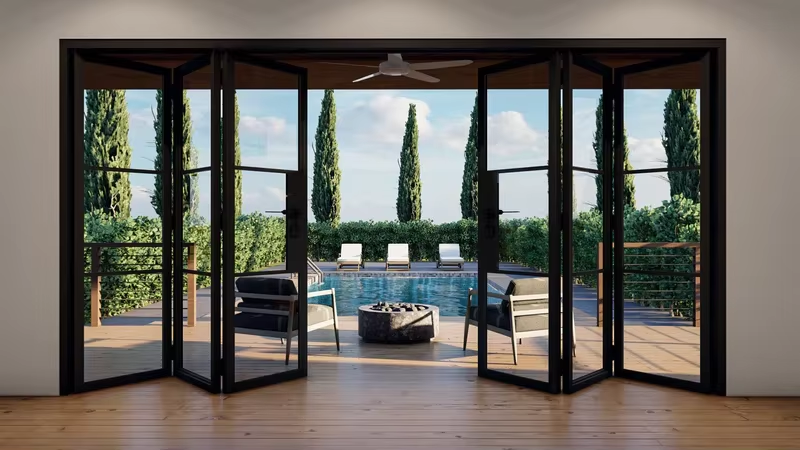
For a specification-led decision, assess the complete door set rather than treating each component as an isolated accessory. Hardware should coordinate with the frame, glass, threshold, and expected traffic. This is especially important for steel frame interior doors and industrial style glass doors, where slim sightlines make fit, finish, and reliable operation easy to notice.
Hardware that controls movement and alignment
Hinges matched to door weight and use
Hinges carry the load and guide each leaf through its swing, so their capacity must match the finished door, including glazing and fittings. For steel frame interior doors, confirm the hinge type, fixing method, and frame preparation before fabrication. Correctly selected hinges help industrial style glass doors open without scraping and keep the meeting edges aligned over repeated use.
Review the number and position of hinges with the door dimensions and expected cycle frequency. A heavy or frequently used leaf may need a more robust arrangement than a light door in a private room. Crittall window door specifications should identify hinge material, finish, load suitability, and adjustment provisions. Those details help installers avoid improvised fixes that can compromise alignment or damage the frame.
Clearances, adjustment, and smooth travel
A hinge can be adequately rated yet perform poorly if clearances are wrong. Check the floor, threshold, adjacent wall, and the gap between meeting leaves across the full swing. For steel frame interior doors, these measurements need to account for the actual floor finish, not only the construction drawing. Industrial style glass doors also require careful control because a small alignment issue can make the glazed panels appear uneven.
Where adjustment is available, establish how it works and whether it remains accessible after installation. Crittall window door specifications should record the intended opening direction, hinge locations, clearances, and any adjustment limits. This information gives the fabricator and installer a shared reference. It also makes later maintenance more straightforward, since changes can be checked against the original setup rather than made by guesswork.
Hardware that secures and seals the opening
Locking arrangements for the intended setting
Select a lock according to the door’s purpose and access requirements. A room divider may need simple privacy control, while an opening between occupied work areas may require a defined locking arrangement. Steel frame interior doors should be prepared for the chosen lock before finishing, including the position of the case, strike, and cylinder where applicable. This avoids late alterations to narrow profiles.
For industrial style glass doors, confirm that the lock and strike engage cleanly when both leaves meet. A latch that catches only when the door is forced can place unnecessary stress on the hardware. Crittall window door specifications should state the lock function, operating side, keying needs, and compatible handle set. Coordinate those choices with the project’s security brief rather than assuming that one lock type suits every interior application.
Seals and thresholds for controlled closure
Seals can reduce drafts, sound transfer, and light leakage, but their location and compression must suit the door design. Check whether the opening needs perimeter seals, a meeting-stile seal, or a threshold solution. For steel frame interior doors, the floor condition and accessibility needs influence the threshold detail. A seal that is too thick can resist closing; one with insufficient contact may not provide the intended separation.
Industrial style glass doors benefit from a considered balance between a crisp closing action and practical sealing. The hardware should bring the leaves into position without forcing them against the frame. Include seal type, finish, and installation location in crittall window door specifications, and confirm compatibility with the glazing and frame profile. This coordination helps prevent an attractive detail from becoming an operational problem.
Hardware that improves everyday usability
Handles, pulls, and operating comfort
Handles affect grip, leverage, and the visual character of the opening. Choose a shape and projection that users can operate comfortably while allowing adequate clearance from nearby walls or furniture. For steel frame interior doors, verify that handle fixings suit the frame and lock preparation. Industrial style glass doors often use simple, visible hardware, so finish consistency matters across handles, hinges, and lock components.
Consider who will use the doors and how often. A handle that feels comfortable during a brief showroom demonstration may be less suitable for a busy shared space. Crittall window door specifications should define handle style, mounting height, finish, and whether the door needs a lever, knob, or pull. Confirm that the selected hardware can be operated without awkward wrist movement and does not obstruct the door’s full swing.
Closers, stops, and a coordinated specification
A closer may be appropriate where a door must return to a closed position, but its force and opening angle should suit the leaf and users. Door stops can protect walls and hardware from impact, provided they are placed where they will not create a trip hazard or interfere with circulation. For steel frame interior doors, plan the fixing locations early so that accessory loads are supported appropriately.
When specifying industrial style glass doors, document how closers, stops, and handles interact with the frame and glazed panels. Crittall window door specifications should bring together component finishes, handing, fixing details, and maintenance access. If you are reviewing options for crittall french doors, use the product information as one input and confirm suitability with the door fabricator. The complete assembly, not an individual fitting, determines the practical result.
FAQ
Which hardware should be specified first?
Start with hinges and the locking function because they influence frame preparation, clearances, and handle selection. For steel frame interior doors, confirm door weight and use before finalizing hinge capacity. Then coordinate seals and accessories through crittall window door specifications so each component fits the intended assembly.
Do glass doors need special hardware planning?
Yes. Industrial style glass doors need compatible fixing positions and careful coordination between the frame, glazing, and fittings. Check the chosen lock and handles with the fabricator, and make sure steel frame interior doors have appropriate preparation. Crittall window door specifications should identify the actual hardware rather than relying on generic assumptions.
Can hardware improve long-term operation?
Appropriate capacity, accurate installation, and accessible adjustment can support dependable operation, but no fitting can compensate for poor alignment or unsuitable door construction. Use crittall window door specifications to document hinge settings, lock details, and maintenance needs. For industrial style glass doors, also keep the frame and moving parts clean and inspect them periodically.