 EN


Choosing glass for steel frame glass doors depends on the conditions the opening will face, not appearance alone. Temperature swings, direct sun, wind-driven rain, humidity, and impact exposure all affect comfort, durability, and safety. The right glass specification balances those climate factors with the building’s use and the steel frame design.
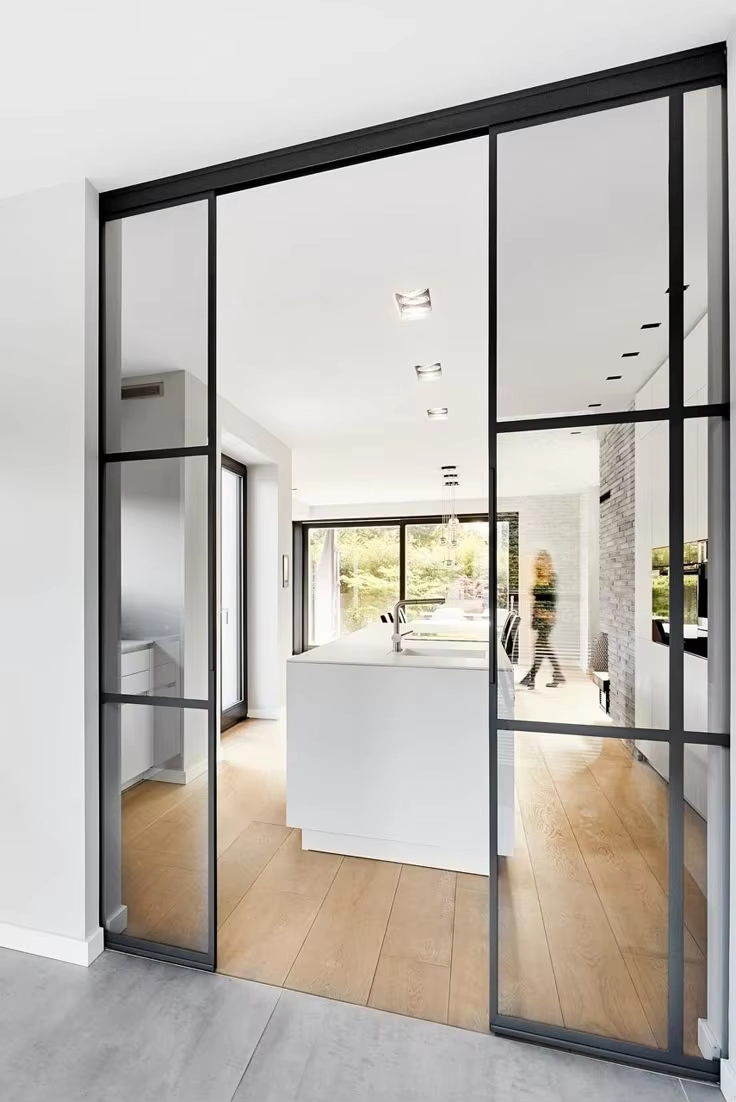
A practical selection starts by distinguishing an interior partition from an exterior entrance. Interior steel frame door installation has different exposure and sealing requirements from a door in a building envelope, while commercial glass partition walls usually prioritize light transfer, privacy, and safe movement. In either setting, tempered glass door specifications should reflect actual use, applicable codes, and the frame system.
Assess Climate Exposure Before Choosing Glass
Temperature changes and solar gain
In regions with hot afternoons and cool nights, glass can heat unevenly, especially where part of a panel sits in direct sun and another part is shaded by a canopy or frame. For steel frame glass doors, ask the project team to review orientation, shading, panel dimensions, and expected temperature differences. Tempered glass door specifications should identify the required safety-glazing type and thickness for the opening rather than assume one option fits every climate.
A south- or west-facing entrance may need solar-control performance to reduce glare and limit unwanted heat gain. That choice should be checked against visible-light needs, interior finishes, and the project’s energy strategy. Commercial glass partition walls inside the conditioned space rarely face the same sun load, but nearby glazing can still create hot spots. Good interior steel frame door installation also leaves suitable clearances so normal thermal movement does not cause binding.
Cold weather and freeze-thaw exposure
Cold climates bring a different set of priorities: indoor comfort, condensation control, and reliable operation when seals and hardware are exposed to low temperatures. A single pane may be appropriate for a sheltered interior partition, but exterior doors may call for an insulating glass unit designed for the frame and building envelope. Tempered glass door specifications should be coordinated with unit construction, edge quality, and safety requirements.
Condensation is not simply a glass issue. Warm, moist indoor air meeting a cold surface can collect water at the glass edge, frame, or surrounding wall, and persistent moisture can damage finishes. For steel frame glass doors on an exterior boundary, review thermal breaks, perimeter seals, drainage, and interior humidity together. Commercial glass partition walls between rooms with different temperatures also need suitable detailing, while interior steel frame door installation should preserve the intended seal and alignment.
Match Glass Construction to Moisture and Weather
Humid, rainy, and tropical conditions
In humid environments, the specification should address both rain exposure and indoor moisture. An exterior opening needs compatible weather seals, drainage paths, and glass construction suited to the anticipated temperature and wind conditions. Tempered glass door specifications cover safety treatment, but they do not replace a weather-performance review. Commercial glass partition walls in damp interiors need moisture-tolerant adjacent materials and careful joints where water or frequent cleaning is expected.
For steel frame glass doors near pools, kitchens, or other humid spaces, consider how condensation and cleaning chemicals may affect the frame finish, gaskets, and hardware. Use glass coatings only when their care requirements and compatibility are understood. Interior steel frame door installation should avoid trapping moisture at the sill or perimeter. If a partition separates a humid room from a cooler space, discuss condensation risk with the design team instead of treating the panel as a decorative insert.
Coastal wind, salt, and severe weather
Coastal locations combine moisture with salt exposure and, in some areas, strong wind or wind-borne debris. The appropriate glass type depends on the building’s exposure category, opening size, local code, and whether the door is part of a protected or impact-rated assembly. Tempered glass door specifications must be checked alongside the frame, glazing method, and hardware; a safety-glass designation alone does not establish resistance to every storm condition.
Salt-laden air can accelerate corrosion around exposed metal components, so the frame finish, fasteners, and maintenance plan deserve attention as well as the pane. Commercial glass partition walls in coastal interiors may face less direct weather, yet ventilation and routine cleaning still matter. For steel frame glass doors on an exterior face, confirm that the complete assembly is suited to local requirements. Careful interior steel frame door installation also prevents gaps that can admit moisture into adjacent finishes.
Coordinate Glass, Frame, and Installation
Set the specification around the opening
A useful specification records where the door sits, how it is used, the expected climate exposure, and the required safety performance. For each opening, identify whether the glass is interior or exterior, fixed or operable, and exposed to impact, direct sunlight, or moisture. Tempered glass door specifications should state the required glass construction and relevant code criteria, while the frame system determines compatible thickness, support, and glazing details.
This coordination helps avoid choosing a pane that is safe in isolation but incompatible with the frame or operational demands. Commercial glass partition walls may use a consistent visual language across a project, but their glass should still reflect room function and privacy needs. For steel frame glass doors, confirm dimensions and hardware clearances before fabrication. Interior steel frame door installation planning should also assign responsibility for field measurements and verify that the opening is square and ready.
Verify installation and maintenance requirements
Even a well-selected glass type can underperform if it is installed with incorrect setting blocks, uneven support, or unsuitable seals. Review the manufacturer’s handling and glazing instructions, and make sure the installer understands the selected unit and frame interface. Interior steel frame door installation requires accurate alignment so the panel swings or slides freely without transferring stress to its edges. Commercial glass partition walls likewise benefit from consistent joint dimensions and stable support.
Before approving the final choice, ask how the glass will be cleaned, inspected, and replaced if damaged. Coastal or high-humidity sites may need more frequent checks of seals and metal finishes, while sun-exposed openings may require attention to heat and glare. Tempered glass door specifications should be retained with project records for future maintenance and replacement matching. These steps help keep steel frame glass doors suitable for the actual climate throughout their service life.
FAQ
Is tempered glass enough for an exterior door?
Not by itself. Tempered glass door specifications address safety characteristics, but exterior suitability also depends on climate exposure, code requirements, glass-unit construction, frame design, and installation. For steel frame glass doors, confirm that the complete assembly meets the project’s weather and safety needs.
Do interior partitions need climate-specific glass?
They may, particularly when rooms differ in temperature or humidity or when a partition receives strong sun. Commercial glass partition walls should suit the room’s use, cleaning routine, privacy needs, and potential condensation conditions. Interior steel frame door installation should account for the same room conditions.
What should be checked before ordering glass?
Verify opening measurements, frame compatibility, exposure, safety requirements, and the intended operating hardware. Review tempered glass door specifications with the project team and confirm that the chosen glass works with the complete assembly. For exterior steel frame glass doors, include seals, drainage, and maintenance access in that review.