 EN
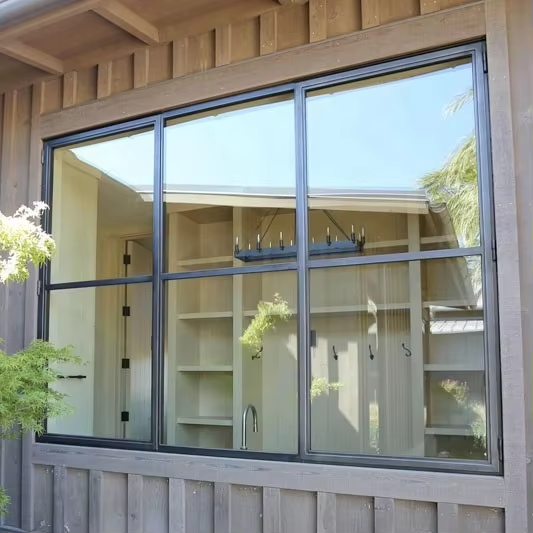
Modern architecture frequently demands custom solutions for unconventional building features. A metal window jamb serves as the structural frame component that holds glazing units in place, and when buildings feature irregular shapes, sloped walls, or non-standard opening geometries, customization becomes essential. The ability to tailor a metal window jamb to fit complex architectural specifications directly impacts both aesthetic integrity and long-term performance.
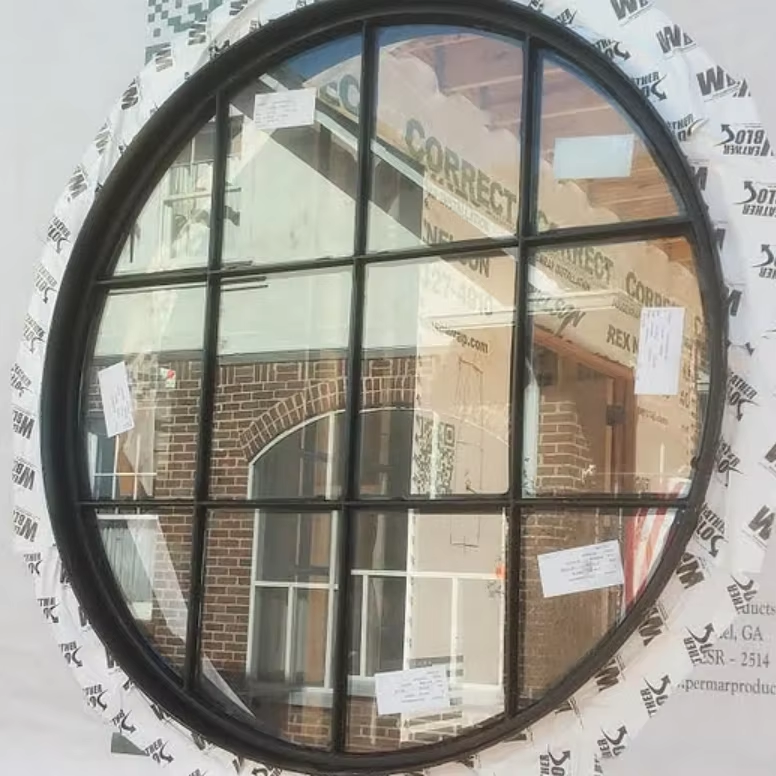
Yes, a metal window jamb can absolutely be customized for complex architectural openings. Custom metal window jamb designs accommodate trapezoidal windows, corner installations, circular or arched frames, and angled wall penetrations. Manufacturers offer on-site measurement, CAD modeling, and material selection to ensure precision fit and thermal performance across challenging architectural scenarios.
Design Flexibility and Material Selection
Adapting Geometry for Non-Standard Openings
Complex architectural openings often feature geometries that standard aluminum window frame installation templates cannot address directly. Modern fabrication facilities use advanced software to map opening dimensions, wall angles, and structural constraints, then produce a metal window jamb that matches those exact parameters. This capability extends beyond simple rectangular frames to accommodate trapezoidal layouts, hexagonal windows, and curved structural elements commonly found in contemporary and historic renovation projects.
Material composition significantly influences how well a metal window jamb adapts to unusual applications. Aluminum alloys offer lightweight properties and corrosion resistance, while steel options provide superior structural rigidity for large openings or heavy glazing loads. Designers choose materials based on opening size, climate exposure, aesthetic requirements, and load-bearing demands. Thermal break inserts can be integrated into custom metal window jamb profiles to maintain energy performance even in thermally challenging orientations.
Thickness and Profile Customization
Standard profile depths rarely satisfy every architectural vision. Custom metal window jamb profiles can be engineered thicker for high-wind zones, deeper to accommodate thicker insulating glass units, or modified to integrate architectural trim elements. The jamb depth directly affects how deeply the window assembly sits within the wall plane, influencing both visual proportion and environmental sealing performance.
Metal window jamb reinforcement brackets become critical when custom geometries create stress concentration points. Reinforcement may be welded at corners, extended along sloped edges, or distributed across wide openings to manage wind loads and thermal expansion. These structural additions are engineered through finite element analysis to ensure the customized assembly maintains code compliance and performance warranties.
Aluminum Window Frame Installation Methodology
Pre-Installation Measurement and Fabrication
Successful aluminum window frame installation for complex openings begins with precise field measurement or architectural drawing review. Professional installation teams measure opening heights at multiple points, record wall angles with digital levels, and document any irregularities before fabrication begins. This data feeds into a metal window jamb design that accounts for settlement patterns, out-of-plumb conditions, and structural movement expectations across the building envelope.
Fabricators produce custom metal window jamb assemblies in controlled factory environments where temperature and humidity remain stable during welding and finishing processes. Prefabrication reduces on-site complications and ensures a metal window jamb meets dimensional tolerances within millimeters. Aluminum window frame installation teams then receive complete assemblies ready for attachment, significantly accelerating site work and reducing quality variables.
Sealing and Weather Performance Integration
Complex architectural openings introduce multiple seal lines and transition points where water infiltration can occur. Proper metal window weatherstripping sealing requires custom gasket profiles, sealant application sequences, and flashing details tailored to the specific geometry. Customized metal window jamb designs may incorporate integral drainage paths, weep hole locations optimized for the opening geometry, and sealant pockets positioned where wind-driven rain typically concentrates.
Metal window weatherstripping sealing performance depends on how well gasket materials conform to the jamb surface. Custom metal window jamb profiles may feature mechanical lock channels, compression seals, or pressure-equalized chambers that enhance weather resistance in complex orientations. Testing protocols simulate wind, water, and air pressure conditions specific to the opening's location and altitude to validate sealing integrity before installation.
Structural Considerations and Performance Validation
Load Analysis and Reinforcement Strategy
Large or irregularly shaped architectural openings concentrate loads unevenly across a metal window jamb. Structural engineers analyze opening span, glazing weight, wind load classifications, and seismic requirements to determine reinforcement placement. Window jamb reinforcement brackets distribute these loads across the building structure, preventing deflection, distortion, or long-term jamb fatigue that could compromise sealing and operational smoothness.
Window jamb reinforcement brackets may be fabricated from the same material as the jamb itself for thermal consistency, or from alternate materials optimized for specific load conditions. Installation depth, spacing intervals, and attachment methods are engineered to handle the custom metal window jamb geometry without creating weak points or stress risers that initiate cracks under cyclic loading.
Thermal and Acoustic Performance
Complex architectural openings often span greater perimeter lengths than standard windows, increasing thermal loss through the metal window jamb if not properly managed. Custom thermal break designs, multiple gasket stages, and integrated insulation layers help maintain energy performance across unusual geometries. The metal window jamb customization process includes thermal modeling to predict condensation risk, heat transfer rates, and seasonal performance across extreme temperature swings.
Acoustic isolation in custom metal window jamb designs requires careful damping material selection and seal continuity across all transition points. Sloped or angled jamb surfaces may require custom backing materials and sealant geometries to absorb sound transmission effectively. These performance features are validated through laboratory testing before field installation.
FAQ
Can a metal window jamb be modified after installation if building movement occurs?
Limited adjustment is possible through shim placement and sealant reapplication, but structural modification of an installed metal window jamb risks compromising integrity. Custom metal window jamb designs incorporate sufficient tolerance allowances and movement accommodation to handle typical building settlement. If significant movement occurs, professional evaluation determines whether resealing, reinforcement bracket tightening, or gasket replacement is appropriate before considering jamb modification.
How does aluminum window frame installation differ when dealing with curved or arched openings?
Curved openings require bending metal window jamb profiles through specialized equipment or creating segmented jambs joined at calculated intervals. Each segment of the metal window jamb maintains proper radial orientation so gaskets and seals conform uniformly around the curve. Aluminum window frame installation for arches involves precise layout work, custom bracket placement to support the curved geometry, and careful sealant management at segment joints.
What role does metal window weatherstripping sealing play in custom jamb performance?
Metal window weatherstripping sealing is the primary defense against water and air infiltration in any jamb configuration, custom or standard. In complex geometries, metal window weatherstripping sealing becomes more critical because water behavior becomes less predictable on sloped, curved, or multi-faceted surfaces. Custom gasket profiles, sealant placement, and drainage strategies ensure the metal window weatherstripping sealing system functions reliably across all opening orientations and weather conditions.