 EN


Evaluating a custom steel door means checking more than its appearance or quoted gauge. Contractors need evidence that the assembly suits the opening, use, exposure, and project requirements. A sound evaluation connects documented materials and fabrication quality to installation details, security needs, and the work expected of the door throughout its service life.
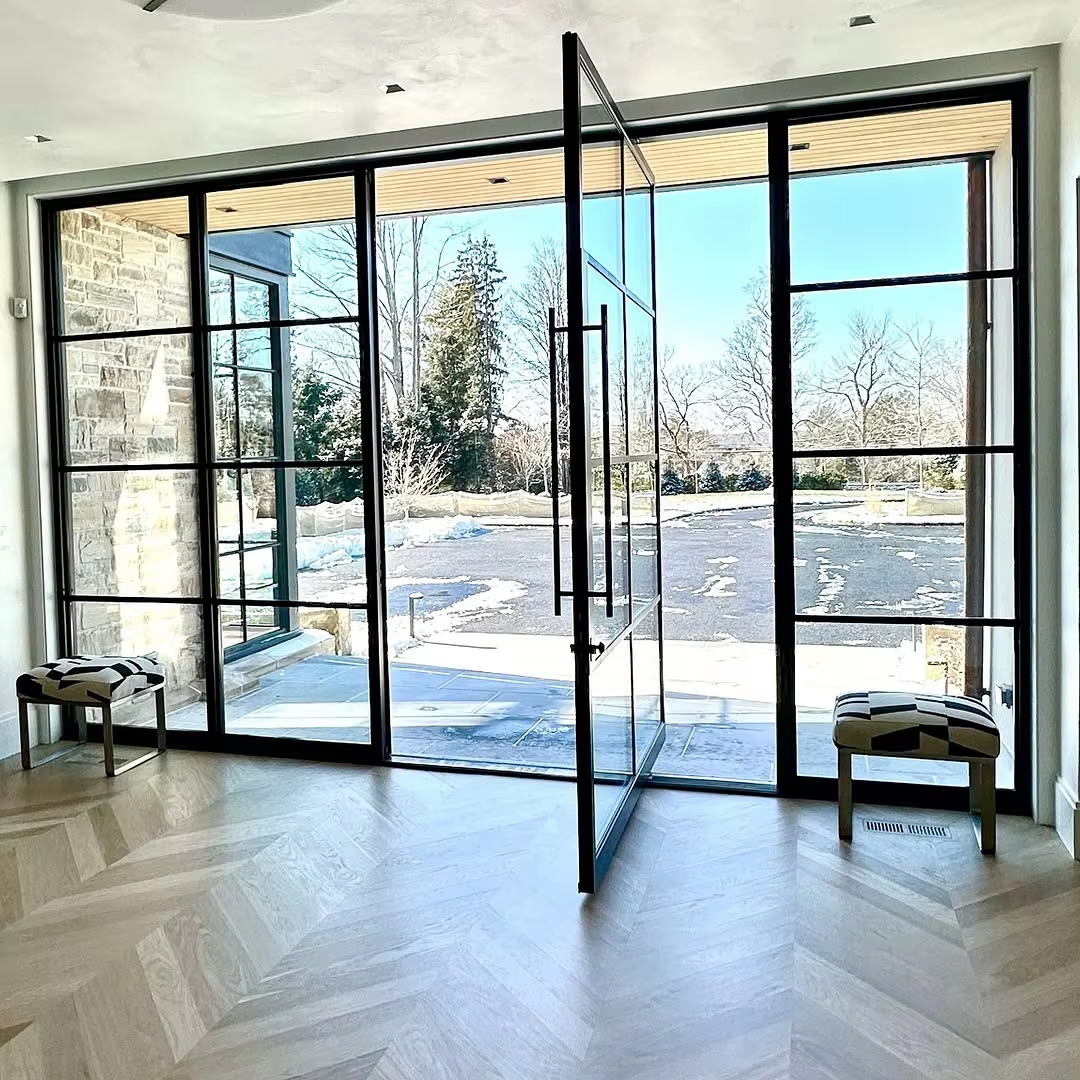
Start by defining the operating conditions and reviewing the submittal as a complete assembly, not an isolated leaf. Compare the proposed industrial steel door specifications with the plans, schedule, and applicable project requirements. Assess how the frame, hardware, finish, and opening preparation work together; steel door frame installation can affect alignment and reliable operation just as much as fabrication.
Establish measurable quality criteria
Confirm materials and documented construction
Request clear information about steel type, thickness, core construction, reinforcement, edge details, and frame profile. Industrial steel door specifications should identify the actual configuration being priced rather than relying on broad labels such as heavy duty. Match these details to the door schedule and intended traffic, because a service entrance, plant room, and public lobby can have different demands.
Review drawings and submittals for dimensions, handing, clearances, glazing openings, and hardware preparation. A custom steel door should be checked against the field opening and surrounding construction before release to fabrication. During steel door frame installation, discrepancies in wall thickness or anchor locations can create costly adjustments, so confirm those interfaces early and record any approved changes.
Inspect fabrication consistency
Look for uniform seams, clean welds, consistent corners, and edges that are free from sharp burrs or visible distortion. Ask how reinforcement is placed around hinges, locks, closers, and other concentrated loads. Industrial steel door specifications are useful only when the delivered build follows them, so contractors should establish an inspection point before finishing or shipment.
Check that holes, cutouts, and hardware preparations align with approved shop drawings. Correct preparation supports smooth fitting and prevents field cutting that may expose unfinished steel. Include steel door frame installation tolerances in the review: the frame must be plumb, square, and secured in a way that preserves the intended clearances. A carefully fabricated leaf cannot compensate for a frame that is out of position.
Match the assembly to site demands
Evaluate security and daily operation
Define the required level of access control before judging commercial steel door security features. Consider the lock type, latch engagement, hinge arrangement, closer, vision panel, and any access-control hardware as an integrated system. Commercial steel door security features should answer actual risks and operating patterns, rather than adding components that conflict with egress, accessibility, or daily use.
Ask whether reinforcement supports the specified hardware and whether the frame provides suitable anchorage to the wall. Commercial steel door security features depend on the strength and fit of the whole opening; a robust lock does not resolve weak attachment or poor alignment. During steel door frame installation, verify that anchors and fasteners match the approved details and the substrate on site.
Account for environment and wear
Assess exposure to moisture, cleaning agents, temperature changes, dust, and frequent contact. These conditions influence material selection, coating preparation, and maintenance expectations. Industrial steel door specifications should state the finish system and describe preparation sufficiently for review. Ask how edges, welds, and hardware cutouts receive protection, since those locations can be more vulnerable than broad, visible surfaces.
Inspect sample finishes under realistic lighting and confirm color, texture, and sheen against the approved sample. A finish review should also consider scratches from handling and the repair process for minor damage. Commercial steel door security features must remain usable after finishing: check that coatings do not obstruct latch movement, hinge action, or the fit of protective hardware.
Verify fit, delivery, and acceptance
Coordinate opening preparation and installation
Before ordering, verify opening dimensions, wall construction, floor conditions, and the required clearances. Steel door frame installation is easier to control when responsibilities for blocking, anchors, grout, sealants, and adjacent finishes are agreed in advance. Record site measurements and resolve differences between field conditions and drawings before the custom steel door enters production.
At delivery, compare labels, quantities, handing, and visible condition with the approved submittal. Protect leaves and frames from moisture, impact, and contamination while stored. Steel door frame installation should follow the approved sequence, with checks for plumb, level, square, anchorage, and consistent reveal. Document adjustments and do not force a leaf into a frame that needs correction.
Use acceptance checks that reflect the specification
After fitting, operate the door through its full swing and confirm that it latches without binding, stays aligned, and works with its specified hardware. Review clearances, seals, finish condition, and any required labels or records. Compare the completed assembly with industrial steel door specifications, not with assumptions based on the appearance of the leaf alone.
Keep approved drawings, material information, finish records, and inspection notes with closeout documents. This creates a useful reference for maintenance and future replacement. If a defect appears, identify whether it relates to fabrication, transport, opening conditions, or installation before selecting a remedy. That process makes quality decisions traceable and helps avoid assigning a field problem to the wrong part of the assembly.
FAQ
What documents should contractors review before approval?
Review shop drawings, material details, hardware preparations, finish information, and applicable test or compliance documentation required by the project. Confirm that industrial steel door specifications match the scheduled opening and approved configuration.
When should steel door frame installation be checked?
Check opening conditions before fabrication, then inspect the frame during setting and again when the leaf and hardware are fitted. Steel door frame installation checks at each stage help reveal dimensional or alignment problems before closeout.
How should contractors assess security provisions?
Define access and operational needs, then review locks, latches, hinges, reinforcement, and anchorage as one assembly. Commercial steel door security features should support the intended risk level without undermining required egress or routine operation.