 EN

Choosing hardware for custom steel exterior doors starts with the way an opening will be used, not with appearance alone. A public entrance, a service corridor, and a coastal loading area place different demands on hinges, locks, closers, thresholds, and frames. Matching each component to traffic, exposure, and security helps create a door assembly that functions reliably in its intended setting.
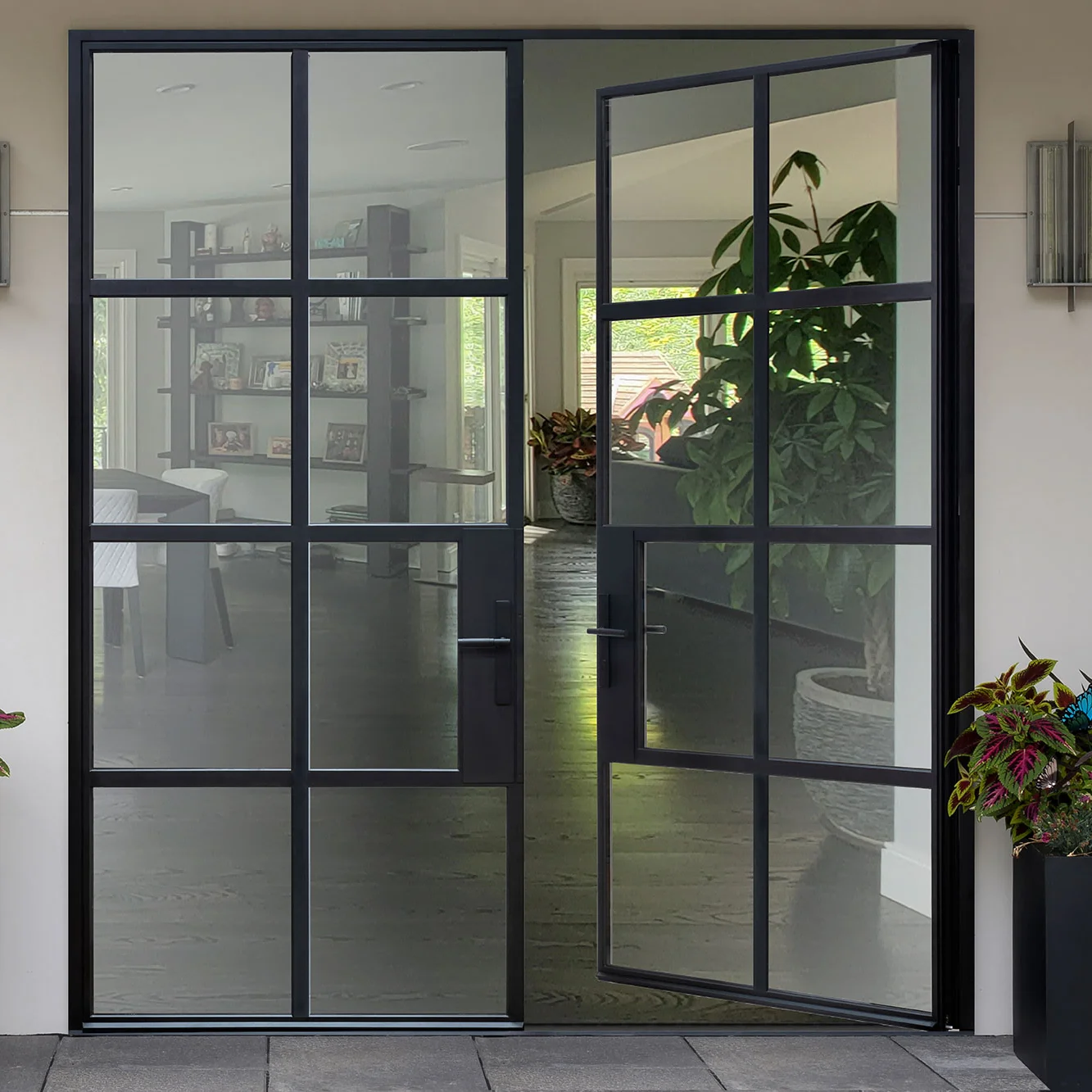
The right selection depends on the whole opening. Durable steel entry door frames provide a stable foundation, while hardware must suit door weight, operating frequency, access control, and local weather. Weatherproof steel door installation also matters: even appropriately specified components can underperform when water management, clearances, or anchoring are overlooked. The sections below connect common applications with practical hardware choices.
Match Hardware to Traffic and Access Needs
Public entrances and frequent daily use
For a busy office, hotel, or institutional entrance, prioritize hardware designed for repeated operation and straightforward maintenance. Heavy-duty hinges should support the leaf without binding, and a properly sized closer should control movement without making entry difficult. Durable steel entry door frames need suitable reinforcement at hinge and lock locations, especially where frequent use can magnify small alignment problems.
Choose a lockset based on how occupants enter and exit. Lever hardware can support convenient passage, while keyed or electronic access may be appropriate where entry needs monitoring. Weatherproof steel door installation at a public doorway should include careful threshold and perimeter-seal coordination, since wind-driven rain can reach areas exposed to frequent opening. Industrial steel exterior door specifications should identify the expected traffic and access method.
Service doors and controlled openings
A staff-only entrance or utility-room door often needs controlled access rather than a decorative handle set. Specify a lock or access device compatible with the building’s operating procedure, and confirm the door can still be released safely from the required side. Durable steel entry door frames should be reinforced to suit the chosen lock, strike, and closer instead of relying on generic preparation.
Where an opening connects to a service yard, consider a rugged lever, protected cylinder, and hardware finishes suitable for handling and routine cleaning. Industrial steel exterior door specifications should clarify keying, credential access, and any monitoring requirements before fabrication. Weatherproof steel door installation should preserve seal contact around the latch edge, while allowing the lock to engage smoothly after seasonal temperature changes.
Choose Components for Exposure and Door Construction
Rain, wind, and corrosive environments
Exterior exposure changes the hardware decision. In wet or coastal settings, select compatible corrosion-resistant materials and finishes for hinges, fasteners, handles, and thresholds. Durable steel entry door frames should receive a finish appropriate to the exposure, with attention to cut edges and connections. Weatherproof steel door installation requires continuous seals, a suitable sill detail, and drainage planning that directs water away from the interior.
A closer can help control a door in windy conditions, but its power and adjustment must suit the leaf and user needs. Avoid treating a stronger closer as a substitute for proper hinges, seals, or frame anchoring. Industrial steel exterior door specifications should state the environmental conditions and finish expectations; weatherproof steel door installation then needs to follow those details without leaving gaps at corners or penetrations.
Door weight, glazing, and frame preparation
Hardware capacity must correspond to the finished assembly, including glazing, cladding, and any added protective components. Confirm hinge type, number, placement, and load rating with the door design rather than estimating from nominal size. Durable steel entry door frames require accurate opening dimensions and appropriate reinforcement so that hardware loads transfer into the structure instead of distorting the jamb.
Glazed doors may require different hardware preparation from solid leaves, particularly around locks and pull handles. Industrial steel exterior door specifications should record leaf dimensions, handing, hardware locations, and frame details before production. Weatherproof steel door installation depends on keeping the assembly square and plumb; correct clearances help seals compress consistently without causing friction at the threshold.
Set Specifications Around Project Use
Commercial, industrial, and institutional applications
Commercial entrances typically balance appearance, accessibility, and controlled entry. Industrial openings may place greater emphasis on impact resistance, simple servicing, or compatibility with adjacent equipment. Durable steel entry door frames can serve either context when their section, anchoring, and reinforcement match the opening. Industrial steel exterior door specifications should describe the actual use rather than relying on a broad label such as commercial grade.
For schools, clinics, or other managed buildings, coordinate locks and closers with access and life-safety requirements established for the project. Confirm that the selected hardware supports the intended direction of travel and operating practices. Weatherproof steel door installation remains essential for exposed entrances, but seals should not impede required movement. Document the requirements early so the door, frame, and hardware arrive prepared as a compatible set.
Coordination before purchase and installation
Before ordering, provide the opening size, wall construction, exposure, traffic pattern, security needs, and desired finish. Ask the project team to review hardware schedules alongside drawings, including handing, cylinder details, closer location, and threshold type. Durable steel entry door frames need compatible anchors and wall interfaces, while industrial steel exterior door specifications should clearly distinguish required features from optional preferences.
At installation, check frame alignment, fastener placement, hinge movement, latch engagement, and contact at each seal. Weatherproof steel door installation should include a water-management review at the sill and perimeter, followed by an operational check under normal use. Record adjustments and maintenance needs for the facility team. These steps help confirm that selected hardware performs as intended instead of merely matching a schedule.
FAQ
Which hardware matters most for a busy entrance?
Start with hinges sized for the completed door, a closer suited to traffic and user access, and a lockset that matches the entry-control plan. Durable steel entry door frames need reinforcement where these components attach. Weatherproof steel door installation should also maintain effective perimeter seals, since frequent opening exposes the entrance to changing conditions.
How should hardware be selected for wet locations?
Specify compatible corrosion-resistant finishes for exposed components, then coordinate seals, threshold, drainage, and frame finish. Industrial steel exterior door specifications should describe the site exposure rather than simply calling for exterior hardware. Weatherproof steel door installation must protect joints and preserve drainage paths so water does not collect around the opening.
What information should be confirmed before ordering?
Confirm door dimensions and weight, handing, wall construction, traffic, access requirements, finish, and environmental exposure. Durable steel entry door frames should be prepared for the selected hinges and lockset. Include these details in industrial steel exterior door specifications, then verify them against the installation drawings before fabrication and weatherproof steel door installation.